Monday, February 29, 2016

My Little Itch

Today, my baby turns four months old. Tomorrow, the world will join together to recognize Rare Disease Day, a day when people who have suffered rare diseases share their stories and spread awareness of those conditions. This is the first year I have a story to share, and it is the first time I’ve shared it in its in entirety. Though I have talked about pieces of my story both publicly and to family and friends, only my sweet husband knows the whole picture. Only he was there during the nights when I slept with bags of frozen peas on my feet because numbness was the only way to quell the itch. Only he heard my unspoken fears about whether our baby would be born alive. Only he saw my heart break, and only he knew how to reach past the pain and touch it in a way that allowed it to slowly mend.

Intrahepatic Cholestasis of Pregnancy affects between 0.1 and 0.2% of pregnancies in the US. It is a hormone-influenced liver disorder that generally “resolves” upon the birth of the baby. There is very little research on the disease, and there is no known prevention or cure. 

ICP usually begins in the third trimester. In cholestasis, the flow of bile (a digestive fluid from the liver) is impaired, causing it to build up in the skin. This results in intense and severe itching, often beginning on the palms and soles of the feet. Toxins are not removed from the body. Nutrients are not pulled from the food. The itching becomes so intense that women literally scratch themselves raw with no relief. The sleep deprivation, psychological suffering, and nutrient deficiencies often result in depression, and sometimes even suicide.

The itching began for me when I was 35 weeks. It started small. I noticed that I was scratching my legs more than usual. Within days it was affecting my arms, palms, torso, back, and feet. It was most severe at night. In the beginning, I thought it was an allergic reaction or a normal pregnancy “thing.” But I had been pregnant before, and had never experienced this. Still, every pregnancy is different, right? It only took a couple of days before I knew that something wasn’t right. THIS wasn’t right. It wasn’t normal. It was like a fiery, searing itch so deep in my skin that I couldn’t reach it no matter how hard or long I scratched. There was no relief. There was no sleep. By the third night, my husband was using an electronic massager on the itchy areas for hours every night just to allow me to fall asleep. In an hour or two I would wake up to pee, and the itching would be so fierce I couldn’t fall back asleep. I would spend the night wandering the house, sitting on the washing machine with my legs in the chest freezer, crying from the relief the cold numbness brought. Jon would wake up, pull the massager out, and get to work again so that I could close my eyes and rest. By that third night, I had bloody lesions on my legs from scratching. I literally could not help myself. For two weeks straight, from that first itchy night to the night of Ander's birth, I got 1-4 hours of sleep a day.

The same week, I went into pre-term labor for the second time. The first instance had occurred at 28 weeks, but had luckily stopped on its own. This time, it didn’t stop. The contractions got stronger and closer together over the next 8 hours, and I finally went into the birth center to get checked. We were able to stop the labor, and I went home.

I started researching pregnancy itching. It didn’t take long before I knew what I had. Intrahepatic Cholestasis of Pregnancy.  I was a textbook case. The words jumped out at me. “Itching.” “Dark urine.” “Fatigue.”

I knew that fatigue. I had been so tired for the last few weeks, even before the sleeplessness started, that sometimes it seemed like an impossible task to stand up and move from the living room to the kitchen. My arms felt too heavy to lift. I just thought I had pregnancy fatigue worse than most people. I don’t know how I took care of my toddler during that time. I know I didn’t do it on my own. There were days when I felt unseen hands literally lift me to my feet.

As I researched, more words jumped out, and my stomach felt sick. “Pre-term labor.” “Meconium aspiration.” “Stillbirth.”

Babies die from ICP. Lots of them. One minute, they are fine—almost full-term, squirming around in their amniotic fluid—and the next, they are still. It happens so fast. Monitoring gives no guarantees. As a mother nears full-term, and hormones rise to prepare for birth, bile levels rise. Liver enzymes rise. Babies enter a danger zone.

At the birth center where I was going to be delivering, there were three midwives and an OBGYN. They are hands-down the most brilliant, competent, and inspired medical professionals I have ever known. I called on a weekend and told them that I wanted a blood liver panel drawn. From that first moment, they took me absolutely seriously. They talked with me about what I was experiencing, and then bumped up my appointment to Monday. They took a blood draw as I had requested. The OB said the last ICP pregnancy she had handled was over a decade ago.  

Bile levels should rest between 1 and 7. Anything over 10 is considered cholestasis. Anything over 40 is severe cholestasis.

It took a week to receive my results. My levels came back at 46.

In cholestatic pregnancies, as the bile levels rise and liver function breaks down, bile and toxins move through the placenta to the baby. In mild, untreated cases, stillbirth rates can be as high as 15%. In severe cases, as high as 40%. If caught early enough, there is medication that can be used to mitigate the risks.

Mine was not caught early.

I was now a high-risk pregnancy. I could not deliver at a birth center. I could not deliver on my own. ICP babies are generally induced and delivered no later than 37 weeks. Most are delivered earlier. Everything I had wanted and planned and hoped for and counted on had changed. I was 36 weeks 6 days when my diagnosis came back.

My OB sat me down and we talked. We talked about the risks and the options. We could do another draw that day and monitor for a week, with ultrasounds every day. At the first sign of fetal distress, we could deliver. We could give him that one extra week to grow. Boys’ lungs often mature slower than girls’. There was about a 50% chance he would be a NICU baby at 37 weeks.  We could try some natural induction methods instead of a harsh medical induction. She could put me on medication to bring the bile levels down.

Or we could schedule an induction immediately and get him out.

We both leaned toward giving him one more week. They drew another blood panel, knowing the results would take a week to return. I was prescribed the medication to bring my levels down. Jon and Eden and I went home. And we prayed. We prayed a lot. We were given priesthood blessings. In Jon's blessing, he was promised that the answer to what we should do would come clearly, in the wee hours of the morning. In my blessing, I was promised that I would be allowed to go into labor naturally, and that my son would be born healthy.

In the morning, we awoke. Jon had received no answer, so he figured we were on the right course. We would wait a week, assuring a healthy baby and a better chance of a natural labor. But at 7 am, I got a call from our doctor. She had awakened at 2 am with an intense agitation about the decision to wait. She hiked a mountain in the dark, seeking answers for our family, and came down with a certain knowledge that we needed to induce immediately or we would lose him. I don’t know what she experienced on top of that mountain. That is between her and God. But I knew that, just as Jon’s blessing had promised, our answer had come clearly, in the wee hours of the morning. It just hadn’t come to him.

We packed a bag and headed to St. Joseph’s Hospital. We were not ready for a three-week early baby. But we both felt an overwhelming peace. More than I have perhaps ever felt. There was a reason for this. This was part of a higher plan.

When we got to the hospital, we discovered that I was already in labor. Naturally, as I had been promised. They decided to augment it with Pitocin to get the baby out as quickly as possible. That labor was like walking through hell with angels at my side. I have never experienced anything so intense and excruciating. I have never felt so close to heaven. Partway through, I asked for pain medication of any kind--begged really--but my doula calmly got in my face and explained that it would be too dangerous for the baby. They didn’t know if his lungs were ready. He would likely be sedated by the medication. His heart rate would drop. There was a high chance of him aspirating meconium. It would be an emergency C-section. He might or might not survive.

At 9:36pm, I gave birth to Ander Orion, naturally and with no medication.  I was on oxygen at that point, and his heart rate had dropped. But then he came. And he was perfect. He was healthy. He was BIG.
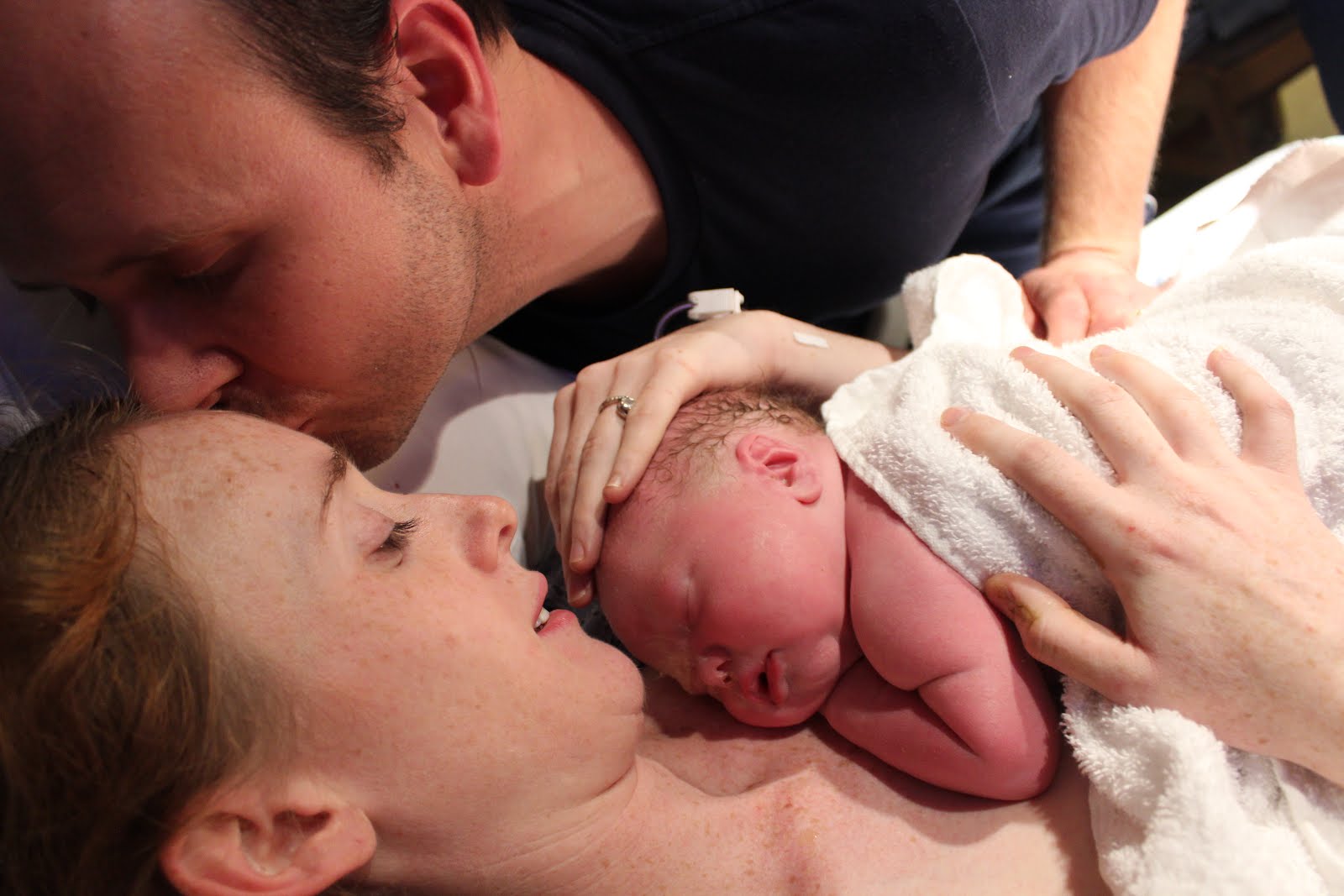

The itching was gone within hours of his birth. My levels dropped to normal. My recovery was a breeze. One week later my second blood panel results came back from the day before induction. My levels had risen from 46 to 96. My liver enzymes, which should have been 20-40, were in the 400s.

Intrahepatic Cholestasis of Pregnancy has a 90% chance of recurrence in severe cases. They don’t know why it happens. I had none of the risk factors. I did not have the genetic mutation that is present in 40% of the cases. I was not carrying twins. I had not been on progesterone supplementation. I had never even had hormonal birth control. I was not over 40. I had no history of liver or gallbladder issues. I ate a whole-food, mostly sugar and preservative-free diet. There was absolutely no reason for me to have gotten this disease. But I did. And if we have future children, statistics say I will have it again. I cannot think about having another child without accepting the fact that I have a chance of burying that child. And if not, a  preemie is likely.  For a while after Ander was born, I struggled emotionally with that. I struggled with not understanding the WHY—with feeling like it wasn’t fair. I had done everything, EVERYTHING, possible to have a healthy pregnancy. And in the end it felt like it didn’t matter. None of it mattered. I got sick anyway. My own body was killing my child. I didn’t DESERVE that.

But here’s the thing. We don’t have challenges because we deserve them. We have challenges because we need them. I prayed a lot, and I never got a “why.” All I got was, “It was necessary. You did everything you could have. This was part of the plan.” And, in the end, that has to be good enough. In the end, the peace comes. It might take days or weeks or months or years. But it comes.

And with peace comes hope. Maybe it’s just me. Maybe it’s just because I’m an optimist. But 10% of the time ICP DOESN’T recur. Why not for me? Whether or not we have more children, I cannot submit to fear. If I bow my head to statistics, then hope dies. And I refuse to live like that.

Ander’s name means “Man of Courage.” It is the name he chose before he was born. He is a survivor. And though science says I now have an “increased chance of liver cancer, gallbladder disease, etc etc” in the future, I'm not worried. The scabs on my legs have healed. My heart is mending. I’m a survivor, too.

Happy 4 months to my little Itch. He’s worth everything.


Wednesday, September 17, 2014

Happy Birthday, Little One!

Eden's First Year

What I Didn't Have to Miss

Sometimes I wonder about Lazarus. In the New Testament, he was raised from the dead, what many regard to be one of the greatest miracles the Savior of the World ever did. It made quite a stir with those around him. It made some believers in Christ. It made others turn against Him. But I wonder sometimes what it did to Lazarus. I wonder what he did with those extra years, the ones he wouldn’t have had had he not been brought back from death. I wonder if he used them differently than he used his previous years. I wonder if he thought about the things he would have missed.


I think about Lazarus a lot. Especially this time of year.

Two weeks from now, it will be May 13th. It’s not a holiday, but it’s a day that I remember, that I honor privately. It’s not something I talk about often. But lately I have been thinking a lot about it. Memories keep swirling in my head that sometimes only resurface this time of year.  I remember lying in a hospital bed in a foreign country, surrounded by doctors speaking in a language I didn’t understand. I remember being poked and prodded, being x-rayed, giving vial after vial of blood, and finally being told, through rough translation, that they didn’t know what was wrong with me. I remember being curled in my bed in my tiny studio apartment, long after the sounds of the city night had faded, in such pain that I wondered what would happen to my students if I didn’t make it. I remember Jon holding me, wiping the sweaty hair back from my forehead. I think I remember him singing. He remembers me pleading to die.
I don’t remember ever being afraid, except of what I might miss.

I came home from Korea early, before my teaching contract ended. I saw a doctor here in the States, and was told that I had parasite damage, heavy metal poisoning, radiation, a failing liver, and inflammation in every organ in my body, including my heart and brain. Most of my organs were beginning to shut down. She told me that if I had stayed another few weeks, I would have died.
I already knew that.

I began treatments, and I didn’t die. But I didn’t get any better. Life became a never-changing dance of pain and sleep, and I spend most of the next four-and-a-half months curled up in bed. Jon, still in Korea, woke up at 4am every morning to talk to me at a time when I would be awake. My dog stayed curled up by my side. Those months are mostly a blur, and I remember very little from that time.
But I remember May 13th. It was my brother’s wedding day, the first wedding in the family. I was, of course, supposed to be there, wanted to be there, prayed to be able to be there. But I woke that morning in a haze of misery, too sick to get out of bed. Disappointment aching inside, I told my dad to go on without me.

A few minutes later, my dad and my brother, all dressed up in their wedding best, came into my room and asked if they could give me a priesthood blessing. I felt hands on my head, and then I felt power. And there was my dad’s voice, commanding me in the name of Christ to rise up and be whole.
And Lazarus stepped from his tomb, from his sleep of death, into life.

There was no pain after that, no exhaustion, no illness. From that very moment. I cannot explain the change, but perhaps that doesn’t matter. Wholeness can never really be understood anyway, except by the broken.

As humanity, we cling desperately to things that are permanent; we seek after things that are immortal. But we only really notice the transient. I love sunsets because they are beautiful and I love them even more because in four minutes they will be gone. If the sunset stayed forever it would mean nothing. We would not notice it any more than we notice that trees have leaves. We would not notice it any more than we notice that we breathe.

But every day is different now. Things that seemed permanent have now entered the realm of “momentary” for me. Even three years later, I notice that I breathe. What used to be a week, a segment of time that meant nothing and sometimes seemed never to end, is now a collection of a million individual moments. And I try really hard not to take any of them for granted.

As I sit here now, I can’t help but think of all the things I didn’t have to miss. Because of one very real miracle, I am alive right now. And because of one miracle, I got to see the day when the man who stayed with me through my darkest nights finally became mine forever. I got to hold my new baby in my arms, squalling with her first breaths, as the rays of morning poured through the stained glass above my head and painted her with a million colors of light. Because of one miracle, I had the privilege of teaching and learning from over two hundred teenagers who passed through my classroom. Because of one miracle, I got to fulfill my dream of swimming with dolphins in the ocean. And, like Lazarus, because of one miracle, I have countless years ahead of me, years that will mean so much more because I almost had to miss them.


Monday, September 5, 2011

Moments


Confession: I have a problem called “Selective Memory.” Capital S. Capital M. For emphasis.

This is probably somewhere in the same family as “selective hearing.” My mom used to holler endlessly to my brother about that, about how he only heard what he wanted to hear, which very rarely included her demands to take out the trash, feed the chickens, or water the half-dead, potted green things in buckets on the back porch. I’ve never really suffered from this ailment so much. But selective memory is much worse. I can’t always remember things. And even worse, I can’t always forget them.

This has nothing to do with getting old, or with being slow. It has to do, mostly, with a memory that has no idea what decade Lincoln was President in, but can remember the first poem it ever memorized in the first grade. “In winter, I get up at night, and dress by yellow candlelight…”

I have no idea what borders Minnesota, but I know that Tennessee had the lowest real estate prices in the country when I was in college. I often don’t remember my four-digit PIN number on my debit card that I use two or three times a week, but I still remember how to tie a fishing lure, though I haven’t done it in many years.

Memory is tricky. There are some things that you think you’ll have forever--a last glimpse of a loved one, good times with your best friends, your first date. But for me, all of these have receded to a realm of colored smoke, where all form and detail has faded to emptiness, and anything I conjure up is only a speculation or a lucent phantom of what was.

And then there are things that are so small and insignificant that I don’t know how I’ve retained them all this time, why they have lived, starved for attention but not for power, in the little pathways of my mind, hibernating for long months and then bursting forth every now and again with such force and persistence and clarity that they occupy the whole of my attention for hours on end. The argument I overheard between my parents one Christmas Eve when I was in junior high that made me sick to my stomach for three days. Flipping the swings at the playground up over the top bar so that the chains clanged in an unholy summons and lifted the seat high above the sand. Walking alone into the dim, musty, dirty shack that smelled of stale bread and crumbling shoes to visit Ted, the old man who ate beet sandwiches, gave kids rides on his motorized wheelchair, and bragged that he was going to live to be a hundred. These things I remember as if they were yesterday, though millions of moments have happened since then, vying for space in that eternal computer.

I do not know why I cannot remember the feel of my first kiss, but my heart re-throbs with all the love and ache of the summer day fifteen years ago, when I sat with a pair of tweezers in a pool of hot, hot sun, pulling the bloated tics from the pink skin of that puppy I loved, who was so small and broken and sick from the day she was born, that the sight of those insects stealing her very life-blood away broke my heart with a million cracks that remain there still.

It seems to me that there are certain events in life that are “big” enough, that we should never forget them. So why, then, do I not remember my baptism when I was eight years old? Why do I not remember getting my driver’s license, though I remember the five months preceding it when I practiced and ran over every shrub and light post in two neighborhoods? All I can say is that I had better remember my wedding when that ten year anniversary rolls around.

Sometimes it’s not a matter of wishing I could remember, but of yearning to forget. I don’t want the old man, yellowed with disease and open sores, naked but for dirt, curled on the brick wall along that village road to lie, dying forever in my mind as he does now. I don’t want to always miss the boy who sat in the trees with me and talked for hours, leaves shutting out the world, who collected stones that we never skipped, who lives on in my memory, laughing. There are some moments that I wish could live in my mind but fade from my heart.

I wish I could call the shots. I wish I could say which events got filed for eternity and which went out with the morning trash. They should be my treasures to keep, my trash to burn.

But that power has never been mine. And perhaps I would regret it if it was. During those times when I scuttle through life, seemingly lost, I always go back to memory. The things I remember tell me who I am. What if I did not remember that argument between my parents on that dark winter night? Would I look at them today with the same joy at their happiness together—with the confidence that problems can be worked out? What if I had never pulled those sickening tics from that soft fur? Would I still have the compassion that spills out my eyes and my hands toward all suffering things? What if what I remembered most about that first love was his kiss, instead of his smile? Would love mean something different?

I’ve never been very good at remembering the big things. Perhaps they are simply too wide for me to really see them. But the collection of those little moments that swim through me has made me a lover of the insignificant. I love anthills. And leaves that are turning colors just at the edges. And half-smiles. And broken red bricks. And I don’t know if I could love any of these things if my memory was taken up by weddings and funerals and milestones. Maybe it will be okay if I can’t remember my wedding in ten, twenty, fifty years.

As long as I can remember the smooth softness of sweet icing, heels clinking on a dance floor.

Saturday, January 22, 2011

Holy Hellions

“Teacher, what is “die?”

I stop my science lecture on living vs. non-living things, and turn to the innocent wide eyes of the five-year-old who has not yet learned this powerful little English word.

“거푸집,” answers her friend, Amy, who is busily coloring the legs of the spider on her worksheet into six of the seven rainbow colors because she doesn’t like the color green.

I quickly glance back to Crystal and see her face go solemn. “I don’t like die. I will not die.”

I can see the fear in her face.

“Crystal, everyone will die. All living things will die. Spiders, dogs…and people. All people will die. Even me. Even you.”

“My grandpa died.” Chris joins the conversation. “He died because he was old, but now he is in…” His brow furrows as he looks for a word that does not yet exist in his vocabulary. He turns to Ian. “천국 in English, what is it?”

“Heaven,” Ian whispers back.

“Heaven. My grandpa is in heaven now.”

Crystal’s eyes have been following her classmates, but now they turn to me. “Do people really go to heaven after they die?”

She will believe anything I tell her. Completely. Because she knows I will never lie to her.

“Yes. People really go to heaven. And when you die, you can go there, too, and be with all your family and friends again.”

Crystal smiles. “Teacher? I am happy.”

I still see their faces. All of them. They run through my dreams. They stare out of the eyes of the little neighbor boy I babysit, though his round eyes are the color of seafoam, and theirs are almond, and glowing like black coals full of hidden fire.  And sometimes, sitting in church and hearing a word like “heaven,” a whole conversation comes back to me, a tingling memory that hurts from my chest down to my stomach in the way that only missing and longing can hurt.

For a whole year, I think was collecting those kids. Collecting their smiles and their tears. Collecting their hugs. Collecting their pain and making it mine. 

“Teacher, I cried on the bus today.”

“Oh, no! Why?”

“Because I was sad because last night Daddy came home and he was angry and outside and Mom outside too and yelling, and Mom go to her room and I hear her cry many tears. And her face red where he hit.  But they didn’t know I hear, and I only cried on the bus.”

And even now, 7,000 miles away, I still want to make their lives perfect, so that Amy never has to tell that story again.

But I can’t, and so I try to remember their laughter instead, because I’ve collected that and made it mine, too.  I still grin when I think about the Christmas concert on my last day in Korea. The kids had all just gotten to take turns sitting on Santa’s lap, where he gave each of them a stocking with a present inside. Crystal, lacking any degree of patience or self-control, had already torn open the wrapping and forgotten about the gift. But then I heard a little giggle, which started growing louder. I turned to look, and saw that she had taken off her shoe and put her foot into the stocking like a sock.

“Look, Teacher! STOCKING!” And she chortled and laughed, and danced on her one-stockinged foot, until I pulled out my camera.  “Teacher, nooooo!” she yelled, yanking the stocking off, and hiding it behind her back, still laughing, the dimples in her cheeks deep, her eyelashes vibrating with delight.

Or Chris, perhaps more carefree and wide-eyed of any of them, hiding under the table in the corner, waiting for me to enter the room.

“Where’s Chris?” I say.

A very solemn-faced boy answers me. “Teacher, he didn’t come today. He is very sick.”

“Yes, Teacher, so sick. He has to go to the hospital.”

Giggle, giggle.

I hear the laughter coming from under the table. Slowly, I peer below, where I see Chris curled up on the floor, covering his traitorous mouth with both hands, muted giggles still spilling from his lips.

“Surprise!”

He jumps up laughing, and launches himself into my arms.

There were a lot of things I expected when I decided to move to Korea for a year. There were a lot of things I planned on.  I planned on the adventure, on falling in love with the wildness of the country. I planned on my job being just a job, a means to the end of exploring Asia.

I remember the day when I found a school administrator scolding one of my kids who was hiccupping uncontrollably, completely unable to respond. The manager got more and more frustrated and kept yelling at her to stop. I went in and took Stella away from the manager, picked her up, held her, and waited for the hiccups to break into the sobs I knew would come, which eased into silent tears, which dried against my neck. It was that day that I realized that those kids would never leave me. The realization shook me. When I saw the manager scolding Stella, I thought, Judy, that discipline would work with Crystal, but not with her. It was then that I realized how well I knew my kids—that I knew why each one cried, and how to make them stop. That I knew which jokes would be funny to Amy, but would be lost on Andrew. I never planned on that. I never planned on these kids being the best part of my year. It was then that I realized that I had indeed fallen in love with Korea. But not in the way I expected.

But I was not always so good a teacher, and those kids were not always heaven. On many days, those seventeen kids were my hell. They raked me over Diablo’s coals. They made me cry in anger and frustration. And they made me yell—something I swore I would never do to a child.

Sometime during the first few months, before my younger class knew enough English to communicate with me, we were doing a craft project, and I passed out papers and scissors to all the kids. Ten minutes later, I was frantically rushing around, trying to help them cut out circles—a very tricky shape when you’re three years old.

But one little girl, Helena, didn’t need any help cutting.

By the time I noticed her turned sideways in her chair, scissors in hand, it was too late. She and the girl next to her were playing “beauty salon,” and the floor was littered with long strands of Sarah’s hair.

No, she didn’t need help at all. She was a pro.

Another time, we were doing phonics. Or we were supposed to. But Jake didn’t like phonics. And he didn’t like sitting. And he didn’t really like school all that much. What he did like was running.

He also liked climbing. With friends. Before I knew what was happening, ten kids were running amuck in the small classroom, Jake separating the three segments of the table, pushing them over from beneath, as a train of kids strung along the length of a jump rope dodged table pieces and imitated, as loudly as they could, every animal sound they knew.

I couldn’t even hear my own yelling above the noise.

But the deepest hell, the one that lived and grew inside of me, was one that didn’t pass at the end of a long, hard day. It was the hell that lived in my heart when they were cruel to each other. It was the hell I waded through when they lied, when I had to teach them how to be good people because their parents were working 60 hours a week and didn’t have the time. It was the hell I lived in when they drove me to be someone I didn’t want to be, when I found myself angry, impatient, frustrated, harried, and unsympathetic. When I found myself causing tears, and realized the fault was my own.

Children are these little pieces of heaven that sometimes put us through hell. But isn’t that what heaven does? Isn’t that what God does? He puts us through a hell so wide and deep that we think we’re going to drown in it, and then he comes and wraps his arms around us and smiles into our eyes and ears with such love and confidence that suddenly all is heaven again, and we recognize it, and it is worth it. Children are like little mini gods, I think. Certainly they do His work best of anyone in this busy, rushing world full of red headlines and broken static.

One minute I am so furious, and the next, little fingers brush my face, count my freckles, curl around my neck with such complete trust and adoration, that I do not know how I can possibly ever let go. And when I have to, some of the light inside of me dims, and I know that I will always miss my little holy hellions.

I stand before the crowd of moms and dads, a microphone shoved into my hands. I had not expected this. Did not know that I was expected to make a speech to the parents of my kids during their Christmas concert on my last day in Korea. Only half of them will understand what I say. And none of them can possibly know the feeling behind the words—the nuances that are never caught in a second language. So I just say the simplest truth I know.

“Thank you for your kids. I love each of them, and they have made Korea amazing for me. I know they are your kids. They’re not mine. But they feel like they’re mine. I was realizing yesterday, this year that is so permanent for me, is fleeting for them. In five, ten, fifteen years, your kids…my kids… will no longer remember me. But I—I will always remember them. And I will always love them.  So, thank you.”

Here I stop, because I’m starting to cry, and the dim lights aren’t dim enough. I hand the mic to one of the Korean teachers and walk off the stage.

An hour later, I find a note on my desk, written in the hand of one of my five-year-olds.

“Christina
I will remember you forever and ever.
Love you.
Ian.”

Friday, January 21, 2011

2010 Remembered

I've finally compiled a slideshow of pictures and videos from the past year, as I've wandered through Korea, China, and the Philippine Islands. It's a tribute to the adventures, the joy, the hard times, and most especially, the ones I loved.

2010 Remembered: PART 1

2010 Remembered: PART 2

Wednesday, November 17, 2010

The Price of Wisdom

Eight-and-a-half months have passed—two-thirds of my time here in Korea is gone. And yet, in some ways, it seems that I have been here eight years. Time has moved in an unbelievable way, like a race car spinning wildly out of control. The weeks pass and I don't know where they've gone. I turn around and my three-year-olds are speaking in complete English sentences. I step back and realize that my five-year-olds are reading, that my clothes smell constantly of pollution and Asian detergent, and that I can sleep through a two-hour commute and never miss a bus or subway transfer.

I have found a crack here where I fit, but still, especially on quiet nights when I look for stars and can’t find them, there are things that I long for from home— the stars, the people, the dusty skies, the desert rain. The rain here smells like bleach, a smell I can’t quite wrap my head around, when every memory I have tells me that rain should smell like chaparral and electricity and dripping desert flowers. At home, the rain was saving, a divine shower of life on the dry desert. Here it is filled with acid, the acrid water eating the roads—a force of nature, but not of life. And yet, there is so much life here .The greenness of this place is as foreign to me as the people, and as unpredictable.

This civilization has been around for millennia, making my own country seem young and naïve, and much less steady than this place that no longer even recognizes the opposition it moves through, does not balk at it, does not complain or feel that it should have an easier lot.

Whereas I, long accustomed to success, find myself torn by the opposition I have found here, indeed, by the very wisdom I am gaining.

Wisdom isn’t cheap, and it certainly isn’t free. The older I get, the more I realize that, of all things in life, wisdom demands one of the highest prices of all, especially for me. The price of wisdom is something that I value deeply, that I cling to tightly.

The price of wisdom is innocence.

It is a price that I tremble to pay.

But I am beginning to see a terrible thing. Ignorance may be bliss, but it is not happiness. And wisdom may leave terrible scars, but they are scars that save. Wisdom sees the complexity in simple things, the sorrow in the joy, and the meaning in the sorrow. Wisdom shows that all of humanity is broken people trying to find a way to be whole.

But still, sometimes I miss the innocence I had before—before I understood poverty, before I really understood sacrifice. Before I saw what it really costs to change. Before I looked at an innocent child and cried inside for what I knew the world would do to them in the coming years. Before I saw such goodness in people who would never understand where goodness comes from. Before I learned in the depth of personal experience how hard the spirit must struggle to remain strong in a broken body. Before, when I could go to a nice restaurant, and not feel the urge to throw up when I saw the prices on the menu, my mind flashing back to the eyes of starving little ones in the Philippines, their tummies slick and bloated in the rain.

I miss the way innocence once made life easy. And I look every day at my kids, still shining with the light of that purity--cruel and tough and brittle and quivering and cutting and forgiving and laughing and brimming over with the raw, bubbling, guile-less honesty that only a child can know. And I mourn for innocence.

But innocence goes and wisdom comes. And as I begin to see the shady corners of the world-- not the geographical corners, but the moral ones, the social ones, the individual corners of emptiness that haunt every heart--I see my own joy become deeper. It is still a reckless joy, still wild, still candid, still exultant over the tiny and mundane, but richer as a whole.  I love fog over misty water a little more. I adore crooked stacks of books a little more tenderly. I play hopscotch on fence posts with a little less reserve.

And in all the opposition, I’ve learned that happiness is the easiest thing in the world.

Though I am still not sure, perhaps this makes wisdom worth the price. 

Wednesday, September 22, 2010

Falling in Love with the Philippines: Days 4 & 5


Wednesday was our day on the water. After checking in to the Bamboo House, a beautiful two-story house entirely made of bamboo, we left our luggage and hopped onto the catamaran we'd rented for the day. Our two Filipino sailor-guides took us around to show us the different islands from out at sea. There are a lot of them—over 7,000 islands in the Philippines, many of them tiny ones close together. We could see the outline of Taal Volcano far off in the distance, heavy clouds quivering over its mouth, heat and ash in their bellies. The ocean here is a color that I have never seen ocean be before. They always talk about the crystal blue waters, and that’s exactly how it is. Just looking over the edge of the boat, I could see the ocean floor in the more shallow areas, and fish gliding in the reefs beneath us.

After some sightseeing, they drove us out over the reefs, gave us snorkels, and set us free to explore.We had some bread that we broke pieces from and held beneath the water. Whole schools of fish swarmed us, enveloping us in amongst them, their slippery bodies flipping against my skin as they crowded for the bread.

There were so many different kinds of fish down there—rainbows and snake-looking things and black fish with frilly fins. The coral was all different colors and shapes and here and there, a purple starfish or a sanddollar, still living, squirming in the water of their world. After we had swum around for awhile, we hooked ourselves to a little motorboat, and were pulled along the length of the reefs, keeping our heads in the water, watching it all open up and spill away beneath us.

At one point, where the reef fell away into open ocean with a long, empty, sandy floor, a three-foot long, green sea turtle appeared out of nowhere and glided along the ocean bottom. He was incredible! We decided to dive down and see if we could get closer to him, but by the time we went up for air and dove back, he was gone. As fast as a blink of an eye.

After snorkeling, we hooked up with a kid on a motorboat, and paid him to take us to an underwater cave. There was an underwater entrance, and one above, hidden in the rocks that you had to climb to and lower yourself through. The light came in through that little hole in the top. The tide was stronger inside, because it was contained. If I just let myself float in the water, it would grab me and throw me to the other end of the cave, against the rock. The light filtered in from above, and also from the hole that reached below the water, giving it some crazy cool lighting. It was beautiful--the the rock with the green and blue growing on it, and the way the light came in from two different angles to hit the water. 


We came back home to our Bamboo House after that, ordered some dinner, including a real coconut, and watched a gorgous orange sunset over the water. After that first Sunday of pouring rain, the only rain we saw was at night. But the clouds that floated across the horizons built up the most incredible sunsets. I love the sunsets of home. But I was mesmerized by the sunsets there. They’re wild like the ocean, instead of wild like the desert.
The sun was setting when we realized that we were in for a rotten day the next day. The sunburns that we had started to feel on the boat suddenly became full-force. It’s been a long time since I’ve been sunburned like that. I was fire-engine red—back, shoulders, arms, legs. Jon’s back and calves got almost as bad of a dose, and he’s actually tan.

I kind of felt cheated. It wasn’t like I was being neglectful. I put on sunscreen. 80SPF. Twice. But then, I don’t know anyone who’s been to the Philippines who didn’t get burned. It’s a hot sun over those islands. Hot and low.

Wednesday night was awful. Any way I laid was painful, and every time I moved, it felt like someone was sticking me with fire. So, basically all of Thursday was spent the same way. I guess I wasn’t looking too good in the morning, because after breakfast, Jon put on a shirt (which had to hurt like crazy), and went off to search for aloe vera. If I’d have known that he was going to traipse across three beaches looking for it, I wouldn’t have let him go. He came back with some fruity smelling lotion that had aloe as an ingredient in it somewhere, some aloe soap, and some burn cream from some clinic he had run across. We gave the burn cream a shot, but sunburns aren’t like other burns.

They’re like burns that have mutated so that they are impervious to all defenses.

 The burn cream stung. A lot. And I don’t think it did much good, except that it made us feel like maybe it would. Here I must concede that the placebo effect is a valid bit of science.

After the room got too stuffy, we went outside and sat in the shade. I was going to read, but I kept getting approached by salesmen wanting to sell me jewelry. And baskets. And dart guns.

Jon wanted a dart gun. Probably he would have mixed his own poison and used it as a tranquilizer at school. Luckily for his kids, he resisted buying it.

That afternoon, we ate at Lucio’s Italian Restaurant, supposedly the best food on the island. As we were eating, I noticed three very skinny little kitties wandering around on the fringes of the restaurant. I’ve never seen such skin-and-bones cats. I started feeding my expensive Italian pizza and cheesy chicken to the hungry kitties.

As we were eating, a couple of men selling baskets came up to the edge of the porch. They were looking up at us from below, and at first I shook my head and indicated that I didn’t want to buy. But every time I looked over, they would place a basket on the edge of the porch in my view, until they had a quite a little row lined up. And I knew that I was eating expensive Italian pizza and feeding cats, and those men were starving.

I didn’t even have to say anything. Jon looked at me and said, “We’re buying something from them,” and pressed P200 into my hand.

I bought a very small basket. I could have bought it for less. But why would I? I love that basket, not so much for its beauty as for what it stands for.

I loved how much good I could do there. I loved that all I had to do was step out my front door, and opportunities to give were screaming in my ears with silent, broken voices.

Saturday, September 4, 2010

Falling in Love with the Philippines: Day 3

On Tuesday, we spent mostly the whole day traveling, first taking a jeepney to the LRT train station, and then the train to the bus station, and then a long, three-hour bus ride to Batangas, the port city where we wanted to catch a ferry to the beach in Mindoro, the island just south of Luzon where we had spent the first few days. The ferry ended up costing more than we had planned, what with insurance fees, and “optional” tips to the random people who yanked our luggage away, carried it a hundred yards, and then asked for a little something for their trouble.

Jon was getting pretty stressed out by all the salespeople and conniving baggage-carriers. As we were sitting at the boat terminal, waiting for our ferry to board, women kept coming up, trying to sell us hotel reservations, maps, more hotel reservations, vacation packages, refusing to be put off by our obvious lack of interest.

But there was one woman that stopped me that I will never forget. We were weaving through the markets of Bachlaran, up toward the stairs of the LRT station. She came forward gently, and, hand outstretched, palm cupped up, brushed my arm. I looked down at the open hand. She said nothing, but I knew that she was hungry, and I knew that she wouldn’t be begging if she had any other choice. In her arms was a baby boy, less than a year old. His arms beneath the white T-shirt had sores on them, and his face was dirty. Bits of colored string were threaded through tiny holes in his earlobes—the only adornment she could afford for her child. I turned to Jon who was carrying the money, and he pulled out a P20 note and handed it to her. She took it gratefully, but I wished it had been more. And it was I who should have given it. She had appealed to me, as a woman and as a mother—to someone who might really understand. I wish I could find her again. I wish that I would somehow cross paths with her one more time. But I know I won’t. Opportunities come once if you are lucky. And they don’t come again.

When we finally got on the ferry, a pretty little catamaran, the ocean breeze was hitting our faces, and all was feeling good, until they suddenly decided that there was a little rain coming down from above, and they had better shroud all the openings in rolls of thick, foggy plastic. No more breeze, no more ocean spray, no more beautiful vistas. The stifling heat made me feel a little naseous, so I eventually opted to ride the trip standing up, where I could feel a little air coming in from the bow of the boat and the movement of the ocean under my feet. After a while standing on a boat, looking out at the ocean, it feels like you are walking on water.
 
 Then the island came into view, and it was beautiful. We disembarked at Puerto Galera, where they had a free jeepney waiting to take us all to White Beach. It was a beautiful ride along a winding road in the jungle, little huts and simples houses built along the road and half-naked Filipinos running along, ladling water or carrying laundry or logs or fishing nets, laughing in that completely free and joyful way that Filipinos do, their lean brown arms swinging as they ran, their bare feet skipping between the trees, heedless of the way that those trees followed them, laughing with them.

We got to White Beach just about as the sun was setting. It was a sunset of blues and purples, not at all like the fire of home. We had planned on continuing out to Aninuan Beach or Talipanan, the next two beaches over, because they were supposed to be quieter, more open with fewer people and touristy stuff. But it was getting late, and we were able to find a cheap place to stay that night. We each paid about five dollars apiece for accommodations.

After feasting at a candle-lit beach restaurant, while sand crabs feasted on us, we caught the flame-throwing show some of the native boys put on. Their brown bodies shining with sweat in the flickering orange light of the fire, moved and danced and played with the power of nature, flames dancing in the black stages of their eyes. They threw and caught and morphed the flames, spinning, dancing, tumbling together, man and fire, on a tiny speck of land in the middle of the Pacific.

Sunday, August 29, 2010

Falling in Love with the Philippines: Day 2


Monday, the second day in the Philippines, was about  as near a perfect day as there can be in this world. That day, we decided to hit Pagsangan Falls. It was a three hour bus ride to get there, and and then another fifteen minutes or so on tricycle. The bus ride was incredible, because it was like a getting little snapshots of the island as we sped through it. Everything from ramshackle shanties of rotting cloth and rusting tin that people lived in, to georgous mountain vistas and fields of rice and banana plantations stretching up into those mountains. Palm trees, curling streams, and towering mountains were everywhere. I was amazed at the poverty of the people living in the midst of such a stunning wealth of beauty. People stared up at me from the streets as I looked out the bus window. That’s something that was both flattering and really disconcerting; I get stared at everywhere there. By everyone. Openly, and unabashedly. I guess I am nothing like them.  At least on the outside. At least in our backgrounds and language and lives and stories. But somehow we're the same. Our smiles mean the same thing.

There was one town that we passed, where there was a group of women sitting at an old picnic table outside, next to their drying laundry strung from lines in the trees. One of them saw me through the window of the bus, and started whispering to another, pointing towards me. Pretty soon, the whole group was casting furtive looks in my direciton. I grinned and waved at them, and they suddenly all burst into smiles and started waving wildly at me. In that moment I felt so connected to them, though I knew nothing about them, not even a name.

Finally, we arrived at Santa Cruz, and took a tricycle to an old hotel that ran the boating service up to Pagsanjan Falls. The river was wide and beautiful, and all along it were small huts and homes, simple, bare dwellings for the fishing folk who made the river their home. We got in a canoe, and, paddled by two Filipinos who knew those waters natively and intimately, we started upriver. The fishermen stopped and watched us, unmoving, as we paddled past, probably quite used to the little wood canoes moving up and down the river. As we moved upriver, and started fighting against the rapids, the two boatmen became like little frogmen, jumping to and fro—out of the boat and back in, a leap over the bow of the boat to the other side, bouncing their bare feet in and out of the water, and pushing off rocks, guiding us perfectly up the stream, against the current, and avoiding the hundreds of rocky traps in our path. It was incredible! We would have capsized and wrapped that boat around a rock fifty times if we had been the ones guiding it.

The view was stunning as we started heading into the canyon. Stretching up on both sides was jungle and rocky cliffs—banana trees, plams, and thousands of other kinds of tropical vegetation. We could hear chattering monkeys, but they stayed out of sight. Apparently they only come out in the morning. I had never seen that kind of beauty before. The vines hanging down were dripping with water; the whole jungle was heaving with water that came down in streams and rivulets, along the trees and down the rock. The first fall we came to was tall and beautiful, and flowed well. This is the rainy season, and the river is high and the falls are strong. Sometimes during this season, they cannot take people past this first set of falls because the river becomes too flooded and dangerous. The day we went was, coincidentally, the first day of the season that the water had been low enough to take people all the way to the main falls.

Pagsanjan Falls is huge and heavy. It is not terribly high, at least visibly. The rock hides much of it. But it comes down as a mighty torrent of water, and shakes the river, creating huge waves the rock out from the place where the falls hits the surface of the river. Behind the waterfall is a black cavern called Devil’s Gate. When we got to the falls, we got out of our canoe and transferred onto a bamboo raft, paddled by more shirtless Filipinos. We headed straight into the waterfall. They say that the falls pounding on your body as you are directly beneath it is the best full-body massage you can get in all of the Philippines. We didn’t get to actually find out, because the falls were so heavy that going directly beneath them would have snapped our bones. We rode under off to the side, still getting a decently heavy downpour over us, but missing the real strength. Once inside the cave, they stopped the raft, and we looked out at the falls from the other side.

Jon and I took the guide’s invitation to swim with him, and jumped off the raft into the water inside the cavern. It was a great swim, an amazing ride, and as we pulled the raft back out and headed to the bank, I looked back and saw a perfect rainbow falling over the falls and into the water.

The ride back was fun, as we shot with the current over the 14 sets of rapids along the river. The sun was getting low, and kids were out along the river, washing clothes with rocks or pulling in the day’s haul of fish. We even saw some Cebu feeding along the river, obviously tamed by the folk who lived in the huts there. As we pulled past the rapids, the sun started getting low, and the river smooth out to glass that we glided along, seemingly effortlessly.


After a quick shower at the boat rental shop, we hopped the bus back to Paranaque, where we gave most of our coconut pie and twenty pesos or so to a few small, starving children, and hopped a jeepney back to Happy Coconuts, the look of a little girl’s stunned, joyful face, and her words, “Oh, thank you!” completely egraven in my eyes and ears. 

Friday, August 20, 2010

Falling in Love with the Philippines: Day 1

We woke up the first morning in the Philippines to pouring rain. And I mean, torrential rain. The tropical storm that started a week or so before had not let up much, and when it rains, it rains hard. The streets were literally rivers, the water completely burying car tires in some places. It looked like cars were just being washed down a river. But no, they were driving, and somehow managing to get from A to B as if swimming in their vehicle was a normal part of their routine.

We decided to try to find church that morning, and set out, hopping on our first jeepney. Jeepneys are the major form of public transportation here. It looks like a jeep, except stretched out. Like a stretch limo would look if it were made of silver and rust. Apparently, they originate from World War II. Each jeepney has its own special name in curling letters across the front—the Christine, the Jennifer, the Workaholic. And in the window are little signs denoting roads and stops that are on that jeepney’s route. They cram people in; up to twenty people can fit on the vinyl benches if you get cozy and half sit on the guy’s lap next to you. But, they’re cheap. For a flat rate of 7 pesos, sometimes 10, you can get to any point on the jeepney’s route. Matted stuffed animals hang from the dashboard, and the plastic tarp they put over the open sides blows up in the wind, letting the rain in. But I love them. They are a brilliantly fun way to get around.

As long as you know where to get off.

We did. We were going to transfer from jeepney to the National Rail, which would take us to within a few blocks of the chapel. Unfortunately, when we got to the rail, we found that that particular piece of the rail had not been built yet. Thus began two hours of jeepney rides in what we hoped was the right direction, and then finally a crammed train ride into the area of town we were headed.

As we were standing in line, waiting for the train to come, I decided to put my camera away, back into Jon’s backpack. A man off to the side of Jon, who had been watching us, noticed what I was putting away. He slowly maneuvered from the side of to directly behind us. Jon put his arm around me and pulled me to his side so that when he talked to me, he had to crane his neck sideways, giving him an excellent corner-of-the-eye view of the would-be robber. I took a more direct approach. I looked over my shoulder and stared at the man—direcly, and unblinkingly, until he moved away.

The train ride was packed and sweaty, but not too bad. However, having come a different way than planned, we no longer knew where we were, or how to find the chapel, although we knew that it was close.

This section of the day is already a little muddled for me—so much happened. There were the beggars—the man with no legs that I didn’t see, but that Jon stopped for and gave all our change to. Then, there was the man, huddled and unmoving on a low brick outcropping, one large T-shirt on his body, and that was all. Not even any pants. There was some kind of see-through scrap of cloth wrapped around his lower body, and he was wet and shivering. He was badly diseased, and yellowed bandages covered about half of his face. He was barely moving, and I knew that the small stack of change we left on the wall next to him was not going to save him.

There was a feeling that came over me then, of a pain like I have not felt before. I’ve seen beggars, but I’ve never seen a beggar who was more than a beggar, who was so sick and poor and tattered that life was actually hell. I have never seen a beggar that I knew would die. It is haunting, and I felt so helpless, standing there, knowing that I could not change anything for him, shaking to realize that life is fragile and that, though we often think we are gods with our gadgets and medicines and shuttles to the stars, we ultimately have little power over life, and even less over death.

And then there were the children. As we were wandering around, lost, I saw a jeepney named “Jesus is the Lord,” turning off of the street in front of us. I decided it was a sign, and we should turn down that street. It led us right to them. Three boys, possibly brothers, none of them wearing anthing more than a pair of shorts, their bodies glistening with the rain and the murky water from the street. They were calling out to give rides on “tricycles,” another form of transportation here that is either a motorcycle or a bicycle with a sidecar fitting two people attatched to it. They ride or pedal you around for a fee. The place where the boys were was a section of road that had been badly flooded and was a couple of feet deep in water. They saw us dressed in our now soggy Sunday clothes, and tried to get us to hop in one of the waiting tricycles. They were probably working as recruiters for the drivers. When we told them no, they followed us, finally asking for some money. Unfortunately we had run out of change. We looked, but had nothing. We finally had to tell them we didn’t have any coins to give them. Then one of them said, “Please, I’m really hungry.”

I never ever want to hear those words from a child’s mouth again.

Jon and I looked at them, and Jon said, “I believe you,” as the other boys echoed the first. “Can you get us some food?” they finally asked. We walked to the corner drugstore.

The boys pointed us in the right direction for the church, and we walked into the last ten minutes of the meeting, just in time to hear the end of a mixed English and Tagalog talk and to sing a closing hymn. While we were there, we learned that there was a ward that met not ten minutes from our hostel, though we had traveled two hours to try to find a congregation.

But I was different after that day in the city.
And I don't believe in coincidences.

Tuesday, August 3, 2010

Falling in Love with the Philippines: Part One

Most people when they come to the Philippines, come and find a beach, buy some beer, and don’t move more than a one kilometer radius for the next six days. And they miss so much. They play tourist, and miss the heartbeat of the place they’re visiting.

We arrived in Manila Saturday night, and ended up taking a very expensive taxi ride from the airport to the Happy Coconuts Hostel where we had booked a stay for the next two nights. It was a good twenty minute ride into Paranaque, the next town south, with mellow English music playing in the cab. The taxi driver had been a taxi driver since he first learned to drive—basically his whole life. He pointed out the different things we saw as we passed them, and told us what prices to expect on jeepneys, and how to get from here to there.

It was one of those life-defining moments as I looked out of the taxi at a world so different from home, and so different even from the home I have found in Korea. Everywhere, tattered buildings looked like they were pieced together with rusty screws and spit, and then had the ocean waves beat on them for days on end.  Signs were mostly in English, mixed with some Tagalog, and here and there a word of Spanish.
The people themselves were sprawled out in the heavy, humid heat. Guys hung around at broken picnic tables and outside fruit stands, barefoot, shirtless, their teeth white and shining in the darkness. Kids ran around, played in the gutters, searched through garbage. I saw one skinny, dirty child begging on a street corner, not an adult in sight. Elsewhere, men were peeing on the side of the road, girls in shorts laughed and jangled in huddled groups, and toothless men and young boys picked through the refuse left by others.

One dog, skinny and hungry, slithered by, sniffing at an empty wrapper.

Between all the buildings rose palm trees and green vegetation, crawling up walls and around bends and curling around the spaces between things. The whole scene was heart-wrenching and heart-capturing, and I think I fell in love with the Philippines on that first taxi ride.

Well, the hostel proved a bit tricky to find. We knew that it had a bamboo gate and was across the street from a fruit stand, but the taxi driver, I think, wanted to fatten up his fare a bit, and we drove past it, and then for a long ways, going very slowly. We did eventually arrive, and found the hostel to be basically the nicest building I had yet seen. Real beds. Polished wood floors. Air conditioning. Wood cabinet dressers and large mirrors. Lavish for what I had seen thus far of the island.

A little ways down the road from the hostel is a river that flows through and tunnels under the road. It has tangled vegetation on both sides, but it flows strong and fast, and looks like a roaring snake curling through the jungle. It smells badly, and is littered with trash, but from a distance, is quite beautiful.

Beautiful. Even in the middle of a city, the palm trees wave, and there is salt in the air, and you can tell that it is an island. Filipino people look South American in every way, except that they have Asian eyes. The islands feel South American too. Even in the city, out away from the beaches and coconuts and fire dancers, you can tell that these are island people, and that, even if they're living in a cement box with a tin roof, they are people of the sea and the sky and the trees that wave in the air curling in from their salty shores.